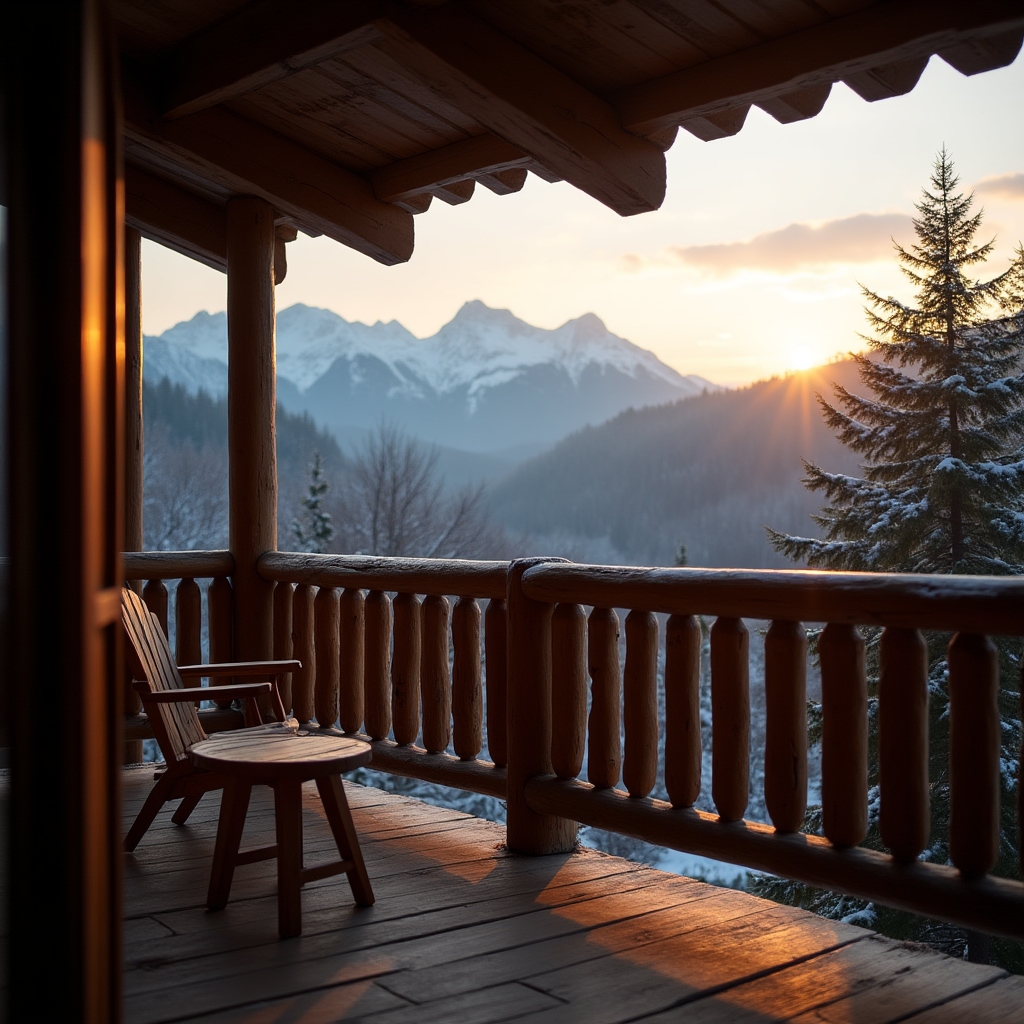
Balcony view of a short-term rental apartment overlooking Tatra mountains near Zakopane
RENTAL ECONOMICS, EXPLAINED

The view from the balcony is free.
The math behind it isn't.

Someone buys a flat near the ski lifts in Zakopane, or two streets from the Motława river in Gdańsk, and pictures the calendar filling up on its own. Then the first cleaning invoice arrives, the platform takes its cut, January is quiet, and the local levy shows up on a form nobody read carefully. We teach you how to see that whole chain before you sign anything.

Educational content only. We do not manage properties, list units, or provide tax or legal advice.

WHY THIS EXISTS

A listing photo shows a room. It never shows a spreadsheet.

Most people who buy or rent a flat for short stays learn the financial mechanics after the first season, not before. They discover that occupancy in a mountain town swings hard between February and April. They find out that a platform's service fee, the cleaning fee they pass to guests, and the days the apartment sits empty between bookings all eat into a number that looked generous on paper.

None of that is a secret. It is published, calculable, and fairly stable from one season to the next. It just rarely gets explained in one place, in plain language, using the kind of arithmetic a spreadsheet can hold. That is the gap this platform tries to close.

"An apartment doesn't earn a nightly rate. It earns a nightly rate minus cleaning, minus commission, minus the nights nobody booked, minus tax. Everything else is a guess."

Framing used throughout the Real Yield course
HOW THE PLATFORM WORKS

Three steps, in the order most owners actually need them

Every module builds on the last one. You are not handed a finished conclusion; you are shown how to build it yourself, using your own numbers or public listing data from the city you are studying.

01

Learn the real yield formula

Start with the online course. You will build a working model that subtracts cleaning turnover cost, platform commission, seasonal vacancy and the local lump-sum or PIT treatment from gross nightly income, so the yield figure reflects what actually lands in an account.

02

Apply it to a specific city

In the pricing webinar, you take that formula and run it against publicly available listing patterns from Zakopane, Gdańsk and Wrocław. The three markets behave differently by season, weekday, and event calendar, and the webinar shows how to read those differences instead of guessing at them.

03

Furnish and price with a clear head

The furnishing workshop closes the loop: how to fit out a rental on a modest budget without it reading as cheap in photos, so the yield you calculated in step one has a fair chance of showing up in real bookings.

WHAT YOU CAN JOIN

One course, one workshop, one webinar. Each does a different job.

Person building a rental yield spreadsheet on a laptop with a calculator and notebook on the desk
Self-paced online course

Real Yield: What a Nightly Rate Actually Leaves You

This course walks through the full chain of deductions that separate an advertised nightly price from what an owner actually keeps: cleaning turnover, platform service fees, seasonal vacancy specific to Polish tourist calendars, and the local tax treatment that applies to short-term rental income. You work with downloadable spreadsheet templates and plug in your own figures or sample data as you go.

  • Built around a reusable calculation template, not a fixed number
  • Covers seasonal occupancy patterns typical of mountain, coastal and city markets
  • Explains where cleaning and commission costs typically sit in a nightly rate
  • Does not include personalised tax advice or investment recommendations
Ask about enrollment
Modestly furnished but well-styled rental apartment living room with warm lighting and simple decor
Live workshop

Furnishing on a Tight Budget Without It Looking Tight

A practical session on how furnishing decisions affect both perceived value in photos and durability under guest turnover. We look at layout choices, lighting, textiles and where it is reasonable to economise versus where cheap materials tend to show up quickly in reviews and re-booking rates.

  • Room-by-room approach: entry, living area, bedroom, bathroom
  • Discussion of durable versus decorative spend
  • Photography-ready staging tips that do not require a large budget
  • Live Q&A slot at the end of the session
  • No product endorsements or paid placements
Ask about the next session
Instructor presenting a pricing strategy webinar with charts comparing rental markets on a screen
Recorded webinar

Zakopane vs Gdańsk vs Wrocław: Reading the Pricing Patterns

Using publicly available listing information, this webinar walks through how nightly pricing tends to move across a year in a mountain destination, a coastal city and an inland city with a different visitor rhythm. It is a lesson in reading seasonality and demand signals, not a promise of what any single apartment will earn.

  • Seasonal curve comparison across the three cities
  • Weekday versus weekend demand patterns
  • How local events and school holidays shift pricing windows
  • Framework you can reapply to any Polish tourist market
Read the city breakdown
THREE MARKETS, THREE RHYTHMS

The same apartment would not behave the same way in every city

These notes summarise patterns typically visible in public listing data. They describe tendencies, not guarantees, and should not be read as a forecast for any individual property.

Zakopane

A destination built around two peaks a year, winter and summer holidays, with a noticeably quieter stretch in late spring and late autumn. Pricing in this kind of market often reflects short, intense demand windows rather than a steady year-round curve.

Read the pattern

Gdańsk

A coastal and old-town market shaped by summer weather, cruise and ferry traffic, and a steady flow of weekend city breaks. Occupancy here tends to lean heavily into the warmer months with a longer shoulder season than a strictly seasonal mountain town.

Read the pattern

Wrocław

A city market with business travel, university-linked visits and event-driven weekends layered on top of leisure stays. Demand here is often flatter across the calendar but more sensitive to weekday versus weekend timing than to season alone.

Read the pattern
SCOPE, CLEARLY STATED

What we teach, and what we intentionally leave out

Rental economics touches areas that require licensed professionals. We stay on our side of that line so you know exactly what you are getting from us and what you still need to source elsewhere.

No property management. We do not list, host, or manage anyone's apartment on any platform.
No tax advisory. We explain how local taxes generally interact with rental income, not what a specific owner should file.
No guaranteed outcomes. Every figure taught is a method applied to public or self-supplied data, never a promise.
No personalised investment guidance. Course material is educational and general in nature.
IS THIS FOR YOU

A quick way to check before you enrol in anything

This tends to fit if

  • You already own, or are close to buying, a flat in a Polish tourist city and want to understand its likely running costs.
  • You manage a family property and want a clearer model than "it worked out fine last summer."
  • You are comparing Zakopane, Gdańsk and Wrocław and want a consistent way to read each market.
  • You want to furnish a unit without overspending or underdelivering on the photos guests judge first.

This is probably not for you if

  • You are looking for someone to manage bookings, guests or cleaning schedules on your behalf.
  • You need a signed tax opinion or legal document for a specific property.
  • You want a single number that tells you exactly what your apartment will earn next year.
  • You are searching for units to buy; we do not sell or broker real estate.
QUESTIONS PEOPLE ACTUALLY ASK

Before you write to us

No. We are an educational platform. We teach the calculations and strategy behind short-term rental economics; we do not operate, list, or manage any property for clients.

The webinar uses publicly available Airbnb listing information as a reference point for demonstrating how seasonal pricing patterns tend to look across Zakopane, Gdańsk and Wrocław. It is used to illustrate a method, not to predict outcomes for any specific address.

No single course can promise that, and we do not claim it can. What it teaches is a repeatable way to model gross income against cleaning, commission, vacancy and tax so you can plug in your own assumptions and see how sensitive your yield is to each variable.

No. The workshop discusses categories of spend, layout principles and durability considerations. It does not endorse or sell any specific retailer, supplier or product line.

No. We explain, in general terms, how local taxes commonly apply to short-term rental income in Poland. For any decision specific to your property or circumstances, a licensed tax advisor or accountant is the appropriate contact.

Curious which programme fits where you are right now?

Send a short message about the city, the stage you are at, and what you are trying to figure out. We will point you toward the course, workshop or webinar that matches.

Get in touch

We use cookies to run this site and, only with your permission, for analytics and preferences. See our Cookie Policy.

Cookie preferences

Choose which categories of cookies you allow. You can change this at any time from the Cookie Policy page.

Necessary

Required for basic site function, security and consent memory. Always active.

Analytics

Helps us understand how pages are used so content can be improved.

Preferences

Remembers small settings such as menu state between visits.

Marketing

Used to measure the relevance of any external campaign referral.